
If your Las Vegas home was built in the 1990s, your 1990s house insulation likely matches what’s next door. That’s because it was installed at the same time, by the same builders, to the same standard. Las Vegas was the fastest-growing metro in the country that decade, and neighborhoods filled in fast. That original attic insulation is now 25 to 35 years old. Space heating and air conditioning together make up about 52% of a typical home’s yearly energy use, so an aging attic hits your biggest utility expense directly.
Original blown-in or batt insulation settles and breaks down over three decades, and most boom-era attics measure well below today’s target for Clark County of R-49. A free in-home insulation evaluation is the fastest way to find out where yours stands.
The 1990s Boom: Why So Many Las Vegas Homes Share the Same Insulation Story
In the release of the 2000 Census, the U.S. Census Bureau ranked Las Vegas as the fastest-growing metro area of the 1990s, with a population climbing 83.3% in ten years. Nevada was the fastest-growing state in the country that same decade, up 66.3%. Growth like that doesn’t happen house by house. Entire master-planned communities went up within a few years of each other, built by the same production builders to the same specifications.
As for insulation, what insulation was used in houses built in the 1990s came down to what was typical of the era for tract construction. That usually involved fiberglass batts or blown-in fiberglass across the attic floor, with little attention paid to sealing the gaps underneath it. During the decade, exact insulation requirements shifted by adoption year and jurisdiction. This makes checking Clark County insulation requirements by year against what’s currently in your attic a worthy endeavor. For a closer look at how those older specs compare to current code, check out the Las Vegas insulation code minimums.
What 30 Years Does to Attic Insulation
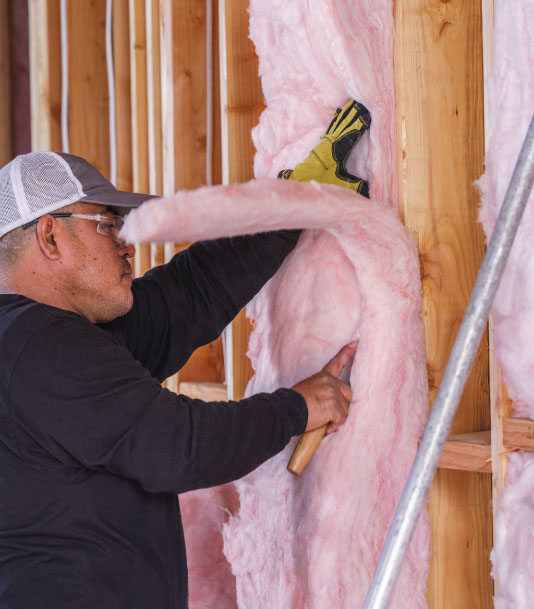
Most insulation doesn’t stay put forever. Loose-fill and blown-in insulation can settle over time and lose some of its overall R-value. Material that may have looked full and fluffy on install day often compresses with age; settled thickness, not original thickness, is what truly determines performance.
Three decades of normal household life adds to the problem too. Attic storage and foot traffic crush insulation almost flat in spots. Years of HVAC service and remodeling, cable runs, and can lights leave gaps and bare patches behind. Don’t forget the air leaks at the attic floor penetrations. These small gaps undercut whatever R-value remains and must be sealed before any new insulation goes in.
An older home that’s hot upstairs in summer is the classic sign of a boom-era attic that can’t keep up. Air conditioning alone accounts for about 19% of electricity use in the average American home, so an underperforming attic shows up directly on your power bill. Check out some more signs your insulation can’t handle Vegas heat to see a more thorough list of warning signs.
What a 1990s Las Vegas Home Needs Today
It’s important to know the insulation target for your climate zone. Clark County sits in IECC Climate Zone 3B, a warm dry zone according to the U.S. Department of Energy. The 2021 International Energy Conservation Code’s (IECC) recommended benchmark for uninsulated attics in that zone is R-49, though R-38 is allowed with a raised-heel truss.
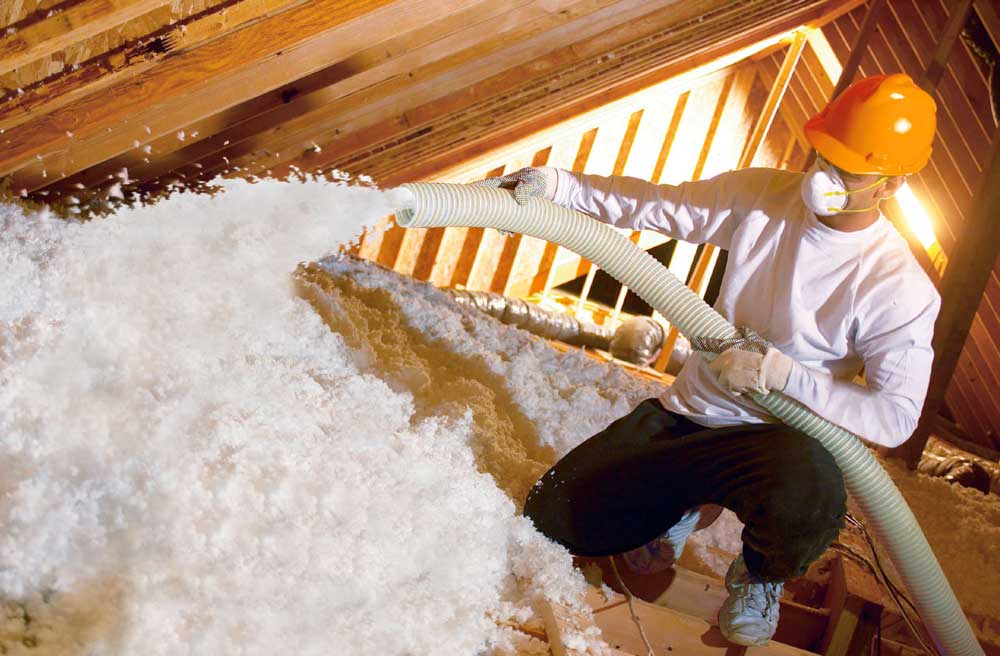
It’s easy to ask the question “Is my attic insulation still good?” And it’s easy to find out. Measure your insulation depth in a few spots around the attic and note the material. Bare patches with joists poking through are an easy sign coverage has thinned out. But depth alone won’t tell the whole story, since R-value per inch varies by material.
Follow this sequence when upgrading:
- Air seal the attic floor.
- Bring insulation depth up to target.
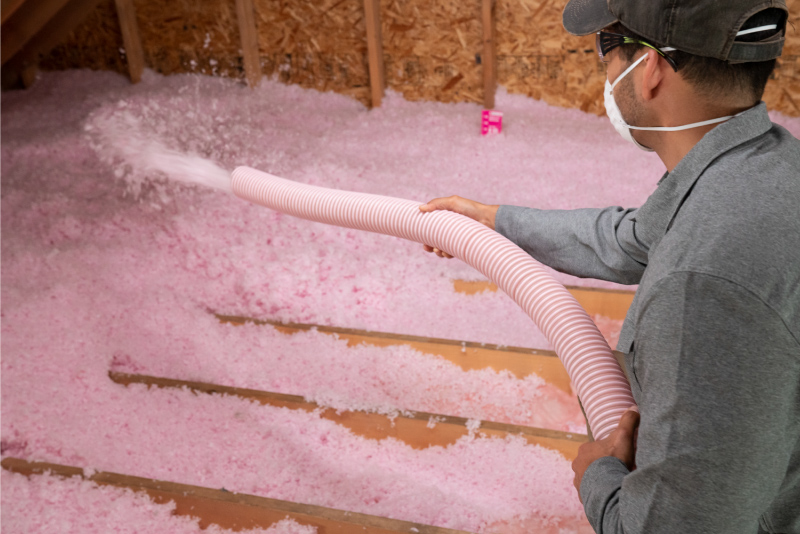
For most existing homes, topping off the attic floor with blown-in cellulose insulation or fiberglass insulation is the most direct path to R-49. Homes with HVAC equipment in the attic often do better with dense pack cellulose or spray foam along the roofline. Either way, insulation upgrades for existing homes usually start with that same depth check.
Frequently Asked Questions
The Fix Is Measurable, Not Mysterious
The same boom that built the Las Vegas valley left thousands of homes with a shared, fixable insulation gap that’s measurable, not a mystery. Check and measure what’s actually in your attic, seal the floor underneath it, and bring the depth up to the Zone 3B target.
Battle Born Specialties has been helping Las Vegas homeowners update their aging attic insulation since 2018. We’re committed to serving our Las Vegas area community with insulation solutions that create more comfortable, energy-efficient homes. Request a free quote and find out where your attic stands. Call 702.720.8839 to get started.
References:
Pacific Northwest National Laboratory. “2021 IECC Climate Zone 3B: Vented Attic, 2×6 Wall, Monolithic Slab on Grade.” Building America Solution Center, U.S. Department of Energy, https://basc.pnnl.gov/images/2021-iecc-climate-zone-3b-vented-attic-2×6-wall-monolithic-slab-grade.
Pacific Northwest National Laboratory. “Air Sealing and Insulating Ceilings in Vented Attics.” Building America Solution Center, U.S. Department of Energy, https://basc.pnnl.gov/resource-guides/air-sealing-and-insulating-ceilings-vented-attics.
Pacific Northwest National Laboratory. “Find My Climate Zone.” Building America Solution Center, U.S. Department of Energy, https://basc.pnnl.gov/building-assemblies/climate-zone-lookup.
United States Census Bureau. “Largest Census-to-Census Population Increase in U.S. History As Every State Gains, Census Bureau Reports.” U.S. Census Bureau Newsroom, 2 Apr. 2001, www.census.gov/newsroom/releases/archives/census_2000/cb01cn64.html.
U.S. Energy Information Administration. “How Much Electricity Is Used for Air Conditioning in the United States?” Frequently Asked Questions, www.eia.gov/tools/faqs/faq.php?id=1174&t=1.
U.S. Energy Information Administration. “Use of Energy Explained: Energy Use in Homes.” U.S. Energy Information Administration, www.eia.gov/energyexplained/use-of-energy/homes.php.
Weiner, Cari. “Insulating Colorado Homes – 10.635.” Colorado State University Extension, https://extension.colostate.edu/topic-areas/family-home-consumer/insulating-colorado-homes-10-635/.
