
Many homeowners assume their attic insulation is doing its job, even though their upstairs stays hot and their AC never catches up. In Las Vegas, having insulation and having insulation that can handle the Vegas heat are two very different things.
On a summer afternoon, attic temperatures can top 150°F in Las Vegas’ warm-dry IECC climate zone 3B. Having thin, settled, or gapped insulation in your attic means your AC runs nonstop. This wears it out faster and wastes valuable energy. Insulation handles Vegas heat only when three things work together: enough insulation R-value, air sealing, and a radiant barrier. Meeting only one of those falls short when summer really hits.
Not sure how your home stands up? A free home insulation evaluation can find the weak spots before the next heat wave.
How Vegas Heat Actually Gets into Your Home
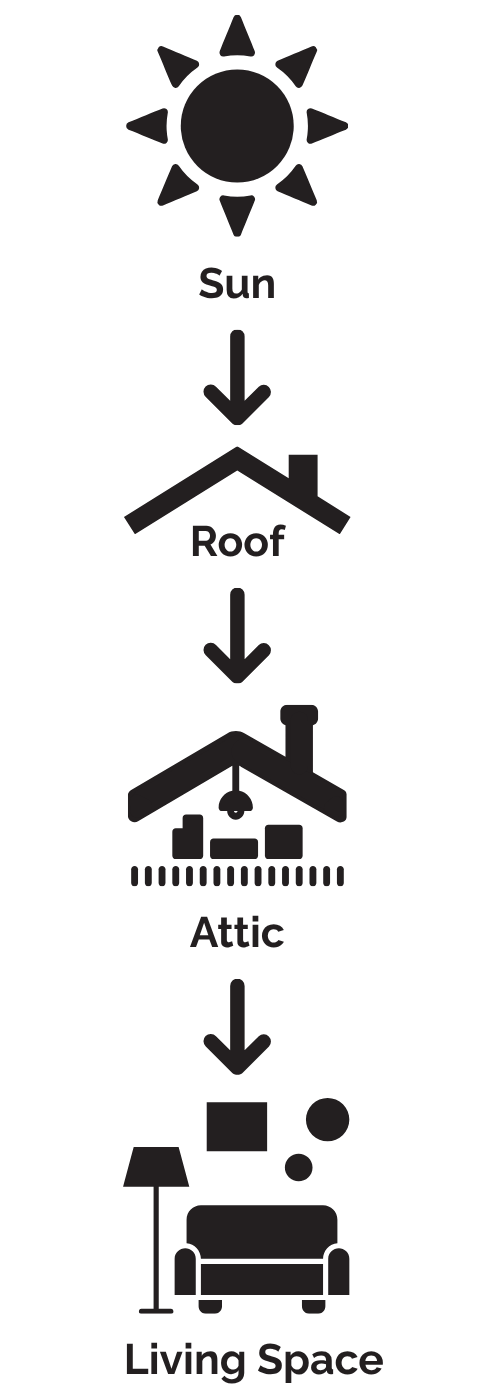
As the sun heats your roof, that heat travels by conduction through the roofing materials to the attic side. There, the hot deck radiates down onto the attic floor, insulation, and any ducts, and eventually through to your living space. On a peak summer day, your attic runs much hotter than the air outside.
R-value resists conductive heat, the kind that travels through direct contact. But a large portion of Las Vegas attic heat arrives as radiant heat, which insulation alone does not stop in the same way. It’s important to address both paths.
If your air handler and ducts also run through the attic, superheated attic air can cause your air ducts to gain heat and lose conditioned air, adding even more strain on your cooling system.
Here is a simple visual of heat’s path into your home:
Signs Your Insulation Isn’t Keeping Up
Insulation problems usually show up as comfort and equipment issues before you ever see anything wrong in the attic. If the question, “why is my house so hot upstairs?” has ever popped into your head, that is usually the first sign your insulation is falling behind.
Watch for:
- Upstairs or west-facing rooms that stay hot no matter how long the AC runs.
- An AC running constantly in your hot house every afternoon, yet still doesn’t hit the thermostat setting.
- Uneven room-to-room temperatures or a ceiling that feels warm to the touch late in the day.
- Summer energy bills that keep rising.
- Insulation in the attic itself, that appears thin, flattened, or uneven, with bare patches around penetrations or the hatch.
Together, these are the clearest signs you need new attic insulation and point to too little R-value, air leakage, and unchecked radiant gain.
What It Takes to Handle the Heat in Zone 3B
Keeping your Las Vegas home comfortable in summer is not a one-step fix. These three upgrades work together as a system to do the job right.
Enough R-Value
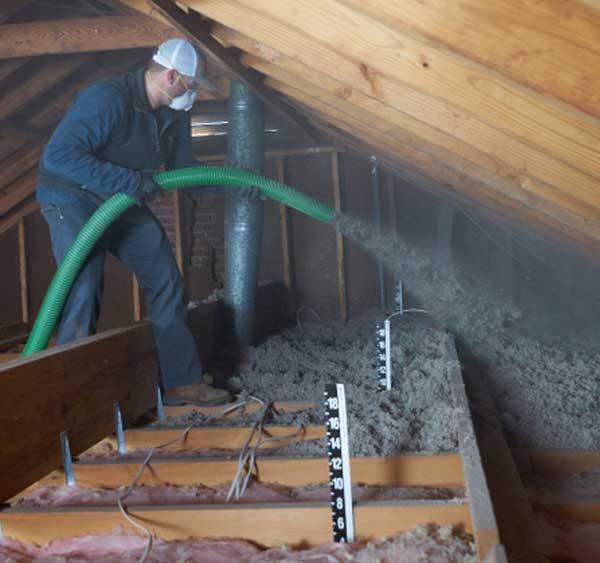
ENERGY STAR recommends an R-value for Las Vegas attic insulation of about R-49 for an uninsulated Zone 3 attic, or R-38 if 3 to 4 inches are already in place. Many older Vegas homes sit well below these levels. Often, even Las Vegas building code insulation minimums fall short of these levels. One common, practical choice for blown-in attic insulation Clark County and Las Vegas homeowners rely on is cellulose insulation.
Air Sealing
R-value alone is not enough if hot air is pouring through the gaps around your light fixtures, plumbing penetrations, or the attic hatch. It is estimated that homeowners can save an average of 15% on heating and cooling costs when they pair air sealing with added insulation in key parts of their home, including the attic. Be sure to seal the attic plane before or along with adding insulation. Spray foam insulation is a strong choice for the job because it handles air sealing desert home gaps and adds insulation in one application.
Radiant Barrier
Much of the desert heat load in our Las Vegas climate is radiant and arrives from the hot roof deck above, not through direct contact. Standard insulation does not block this path, which makes a radiant barrier essential. Radiant barriers work best in hot, sunny climates, especially when ducts run through the attic, and can cut cooling costs by 5 to 10%.
Heating and cooling account for the largest single share of home energy use. Upgrading the energy efficiency of your attic with these three steps creates a highly effective buffer between the desert sun and your living space.
Frequently Asked Questions
Be Prepared for the Summer Heat
Vegas heat does not care how thick the insulation looked upon installation. Keeping up with climate zone 3B insulation for Nevada summers takes a system: the right R-value, air sealing, and a radiant barrier. When all three are in place, your attic stops acting like a heat reservoir, and your AC finally gets a break.
Battle Born Specialties evaluates all three and upgrades where it counts. We know what insulation for Las Vegas heat actually requires, and we have been proving it for Las Vegas homeowners since 2018. Call us at (702) 720-8839 or visit us online to schedule a free home insulation evaluation today.
References:
ENERGY STAR. “Methodology for Estimated Energy Savings from Sealing and Insulating.” U.S. Environmental Protection Agency, www.energystar.gov/saveathome/seal_insulate/methodology.
ENERGY STAR. “Recommended Home Insulation R–Values.” U.S. Environmental Protection Agency, www.energystar.gov/saveathome/seal_insulate/identify-problems-you-want-fix/diy-checks-inspections/insulation-r-values.
Las Vegas HVAC Authority. “Las Vegas Climate and HVAC System Demands.” Authority Network America, https://lasvegashvacauthority.com/las-vegas-climate-hvac-demands/#:~:text=Las%20Vegas%20attic%20temperatures%20routinely%20exceed%20150°F%20in%20summer.
Pacific Northwest National Laboratory. “Attic Radiant Barriers.” Building America Solution Center, U.S. Department of Energy, https://basc.pnnl.gov/resource-guides/attic-radiant-barriers.
Pacific Northwest National Laboratory. “Find My Climate Zone.” Building America Solution Center, U.S. Department of Energy, basc.pnnl.gov/building-assemblies/climate-zone-lookup.
