
Many local homeowners hear that an attic radiant barrier in Las Vegas will keep their house comfortable all year. Then December arrives, and their bedrooms still feel chilly. So what does a radiant barrier really do in winter?
In Las Vegas, our winters are mild, but the nights still get cold. The National Weather Service lists our normal average temperature as 48.2°F in December and 50.4°F across the meteorological winter, from December through February. Foil insulation marketing rarely explains that a radiant barrier only blocks radiant heat. It does nothing about heat moving through materials or air leaking through gaps.
A radiant barrier is a summer tool that does very little in winter. During the coldest months, the small amount of heat gain from the attic helps your heater when it’s running, and a radiant barrier blocks some of that warmth. Real winter comfort comes from air sealing and the right attic R-value. Read on to see how foil works and when an attic assessment makes sense.
What a Radiant Barrier Actually Does
The physics in one paragraph
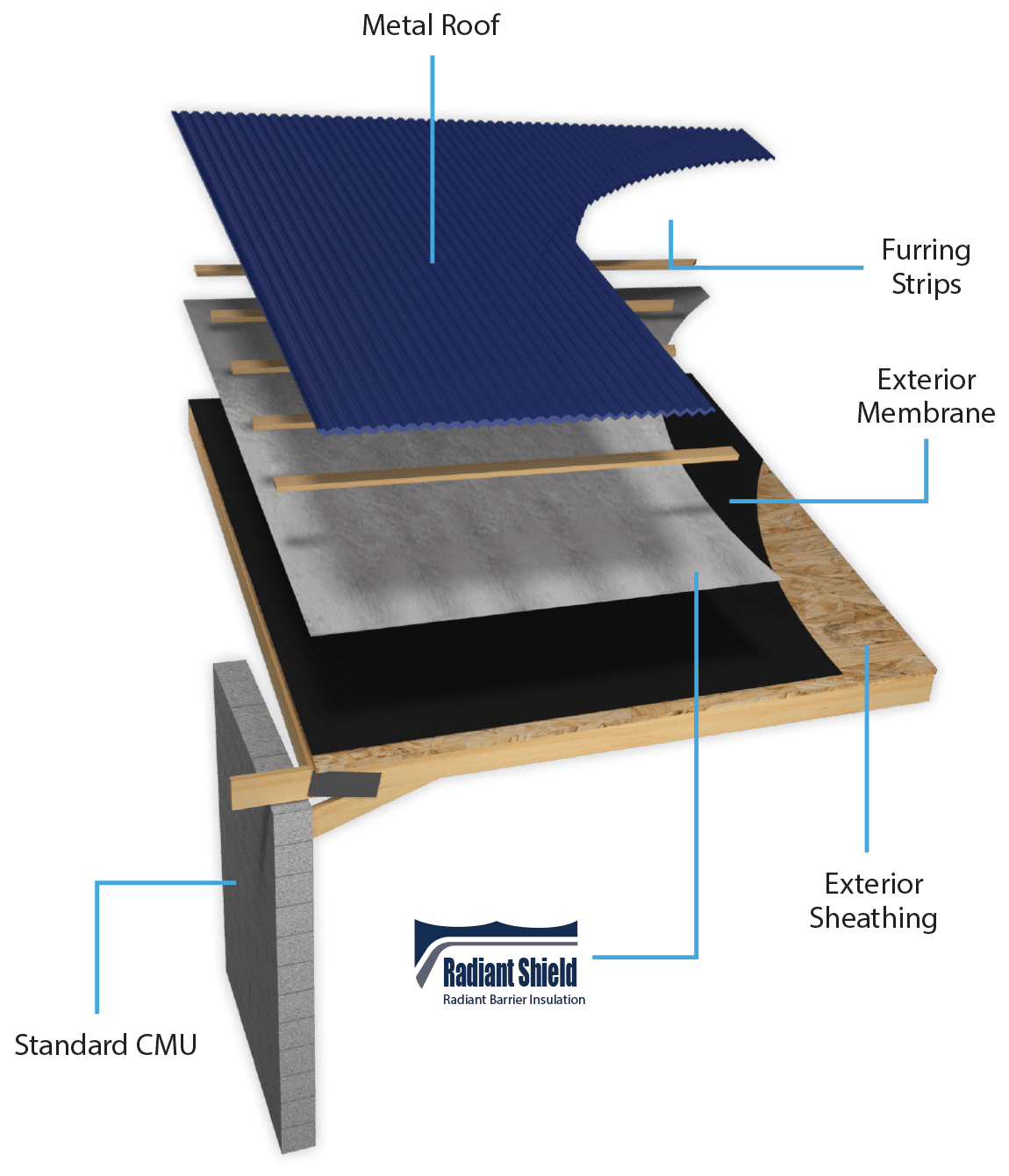
A radiant barrier is a reflective foil placed next to an attic air space. It blocks radiant heat moving from the hot roof deck to the insulation below. Foil reflects thermal radiation well and gives off very little heat of its own. To count as a radiant barrier, a product must have a long-wave infrared emittance below 0.1 under the ASTM C1371 test.
Where it goes
Recommended places to install a radiant barrier are under the roof decking or on the rafters or truss chords. You can also lay it on top of ceiling insulation. Only the first two spots are recommended for sheet foil because dust collects at the third. Floor-laid foil can also create moisture condensation problems. For single-sided foil, use a radiant barrier foil facing down setup, with the shiny side toward the attic floor.
What it does NOT do
A radiant barrier does not affect convected heat or air moving through the attic. That is the heart of the radiant barrier vs insulation question. Foil never replaces the R-value of your insulation and should not be used as a form of insulation. To see how summer heat builds overhead, read our guide to attic insulation in Las Vegas heat.
Radiant Barriers in Winter — What Happens at 40 Degrees
The honest answer
A radiant barrier in winter has very little to work with. Its benefit depends on attic heat gain from a sun-heated roof, so its advantages fade when that heat gain is small. It can even work as a disadvantage, as it blocks the extra warmth the sun produces on a sunny winter day. Blocking that heat is its biggest benefit in summer, but in winter, that extra warmth is a small bonus. Essentially, the more of your energy bill that goes to heating, the less desirable a radiant barrier becomes.
Is there any winter benefit?
Foil may reduce some heat loss through the roof on winter nights. However, testing has not demonstrated it in a meaningful way, so claims about radiant barrier winter heat loss savings remain unproven.
Oak Ridge National Laboratory tested attic radiant barrier systems in a large climate simulator under both summer daytime and low-sun winter conditions. The only gains reported were summer daytime heat-flow cuts of 19% to 50% versus the control.
Context for savings claims
You may see claims that foil cuts attic heat flow by about 40%. That figure typically equals 8% to 12% of annual cooling costs. Those are cooling numbers, and they say nothing about heating. If your attic is already insulated to R-30 or better, there is little heat flow left to reduce.
Local framing
Clark County sits in IECC 2021 Climate Zone 3B, which is warm and dry. Under the Southern Nevada amendments, areas of the county above 4,000 feet are treated as Zone 5B. For most of the valley, climate zone 3B insulation needs center on keeping summer heat out. That’s why foil earns its keep in July. January is a different story. Here’s an easy rule to remember: foil fights sunshine, insulation fights temperature.
What Actually Keeps Heat Inside a Las Vegas Home in Winter
Start with air sealing
The Environmental Protection Agency (EPA) estimates homeowners can save an average of 15% on heating and cooling costs by air sealing and adding insulation. The attic is a key place that holds some of the largest opportunities to save energy in your home. Air leaks often hide in a variety of places, including around the attic hatch, recessed lights, and wiring and plumbing holes. Darkened or dirty insulation is a telltale sign that air is moving through it.
A cold attic in Las Vegas in January is normal for a vented attic. The trouble starts when warm air from your living space leaks into it and escapes through the attic vents. That’s why the EPA recommends sealing first and insulating second. Spray foam insulation can handle both jobs by filling gaps as it insulates.
Then depth and coverage
Check your insulation next. Look for symptoms like drafty rooms and uneven temperatures between rooms. For effective attic insulation for the Las Vegas winter, depth and even coverage matter most. Blown-in cellulose insulation fills tight spaces around joists and wiring. Fiberglass is another solid option. Our existing home insulation upgrades can help you find the right fit.
When to call a pro
Damp insulation and moldy or rotted framing call for a professional. Poor attic ventilation and pre-1930 knob-and-tube wiring belong on that list too. A trained crew can remediate moisture issues and manage ventilation before new insulation goes in.
Where foil still fits
If your ductwork runs through the attic, a radiant barrier keeps those ducts cooler in summer. Think of foil as a summer add-on once your air sealing and insulation are right.
Frequently Asked Questions
Get Your Attic Ready for Every Season
The honest verdict: A radiant barrier is a summer measure, and it won’t fix a cold house in winter. Winter comfort comes down to air sealing and the right R-value overhead.
Since 2018, Battle Born Specialties has helped Las Vegas homeowners stay comfortable with tailored energy efficiency solutions. Our licensed team will check your attic for leaks and insulation depth, then give you a clear answer about adding a foil barrier. Now is the perfect time to schedule your attic assessment before the next cooling season arrives. Contact us today to learn more.
References
Antonopoulos, Chrissi, et al. Guide to Determining Climate Zones by County: Building America and IECC 2021 Updates. PNNL-33270, Pacific Northwest National Laboratory, Sept. 2022, www.pnnl.gov/main/publications/external/technical_reports/PNNL-33270.pdf.
“Attic Air Sealing Project.” ENERGY STAR, U.S. Environmental Protection Agency, www.energystar.gov/saveathome/seal_insulate/attic-air-sealing-project.
“Attic Radiant Barriers.” Building America Solution Center, Pacific Northwest National Laboratory, 4 Dec. 2022, https://basc.pnnl.gov/resource-guides/attic-radiant-barriers.
Melody, Ingrid, et al. “Radiant Barriers: A Question and Answer Primer.” Florida Solar Energy Center, University of Central Florida, 2005, https://www.fsec.ucf.edu/en/publications/html/FSEC-EN-15/index.htm.
“Methodology for Estimated Energy Savings.” ENERGY STAR, U.S. Environmental Protection Agency, www.energystar.gov/saveathome/seal_insulate/methodology.
“Monthly, Seasonal and Annual Average Temperatures.” National Weather Service Las Vegas, National Oceanic and Atmospheric Administration, www.weather.gov/media/vef/WarmestandColdestMonthlySeasonalandAnnualAverageTemperatures.pdf.
Shrestha, Som S., et al. “Thermal Performance Evaluation of Attic Radiant Barrier Systems Using the Large-Scale Climate Simulator (LSCS).” Thermal Performance of the Exterior Envelopes of Whole Buildings XII, Dec. 2013, Oak Ridge National Laboratory, www.ornl.gov/publication/thermal-performance-evaluation-attic-radiant-barrier-systems-using-large-scale-climate.
Southern Nevada Building Officials. Southern Nevada Amendments to the 2021 International Energy Conservation Code. Clark County, 2023, www.clarkcountynv.gov/adobe/assets/urn:aaid:aem:988dc5cc-6e3b-4964-939f-b3dd54636491/original/as/2021-iecc-southern-nevada-amendments.pdf.
